Italiano
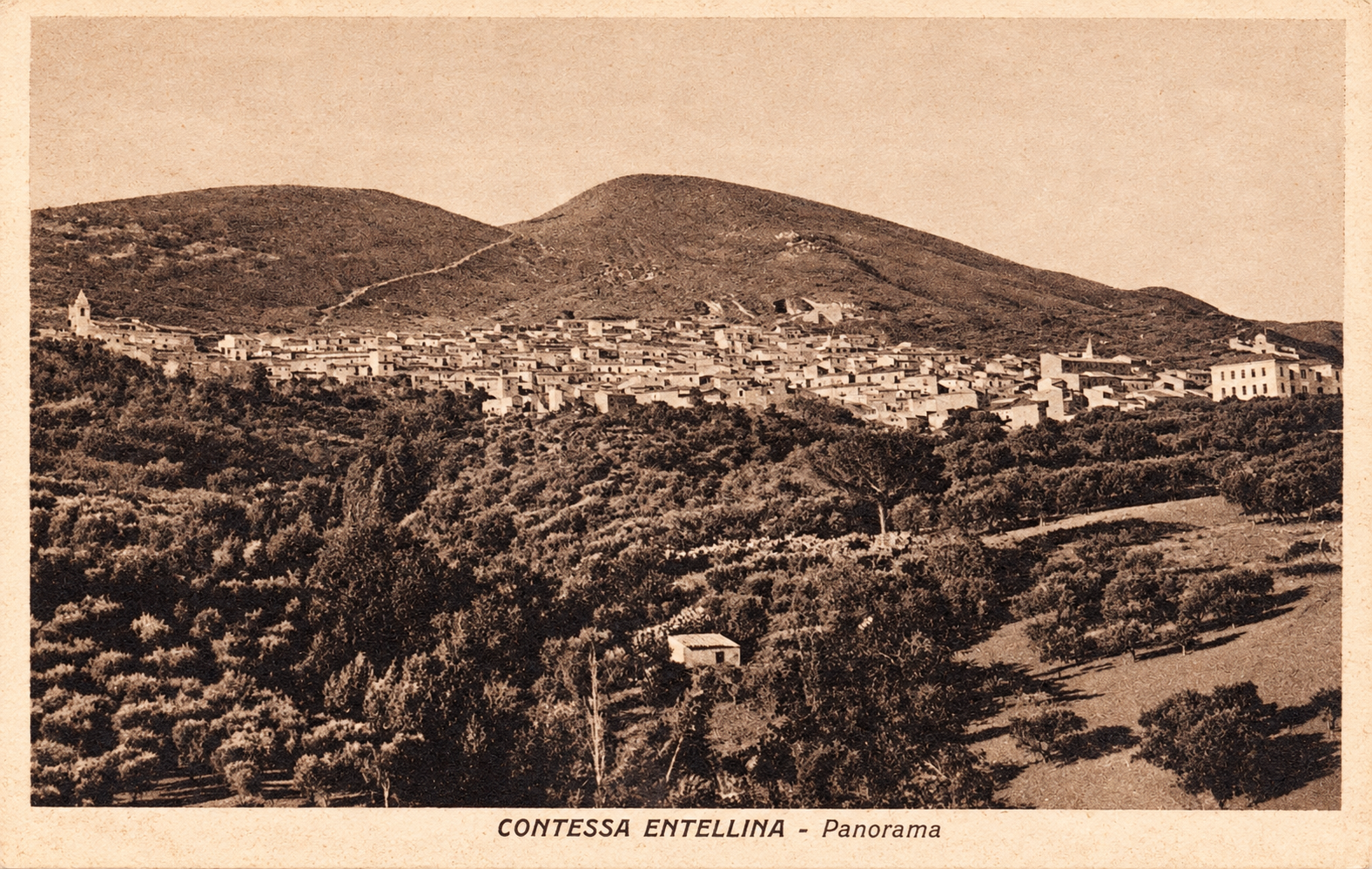
Contessa Entellina: From Its Origins to the Eighteenth Century
The origins of present-day Contessa Entellina, a town in western Sicily on the slopes of Mount Genuardo, are closely linked to the settlement of a community of Albanian origin. This community took shape amid the migratory movements that affected the Balkan Peninsula and southern Italy during the fifteenth and sixteenth centuries.
The area was already known in medieval times for a settlement called Casale di Contessa, also referred to in historical sources as Vinea Comitissae and documented from at least the thirteenth century. According to local historical tradition, an initial group of Albanians settled near the old hamlet around 1450, helping to rebuild and repopulate it.
The legal terms of the settlement were established in December 1520, when Alfonso Cardona granted the Albanian settlers a set of provisions (capitoli) governing the settlement and cultivation of the fiefs of Contessa and Serradamo and defining the inhabitants’ rights and obligations toward the feudal lord.
Although Sicilian documents frequently described these settlers as “Greeks,” they were in fact of Albanian origin and followed the Greek Byzantine liturgical tradition. Their language, Arbëresh, together with their cultural customs and religious rite, has been passed down through the centuries and survives today as an essential part of the town’s historical and cultural identity.
Over the centuries, however, families from other Sicilian towns settled alongside the population of Albanian origin. Most of these newcomers followed the Latin rite. Initially a minority, this community gradually grew, especially during the seventeenth century, contributing to changes in the town’s social, cultural, and religious composition.
The growth of the Latin-rite population made it necessary to establish a parish specifically for its members. The parish was formally created on December 9, 1698, by Francesco Ramirez, Bishop of Girgenti (Agrigento). The church of Santa Maria delle Grazie, commonly known as Madonna della Favara, was provisionally assigned to the new parish, although the Greek-Albanian community retained its existing rights over the building.
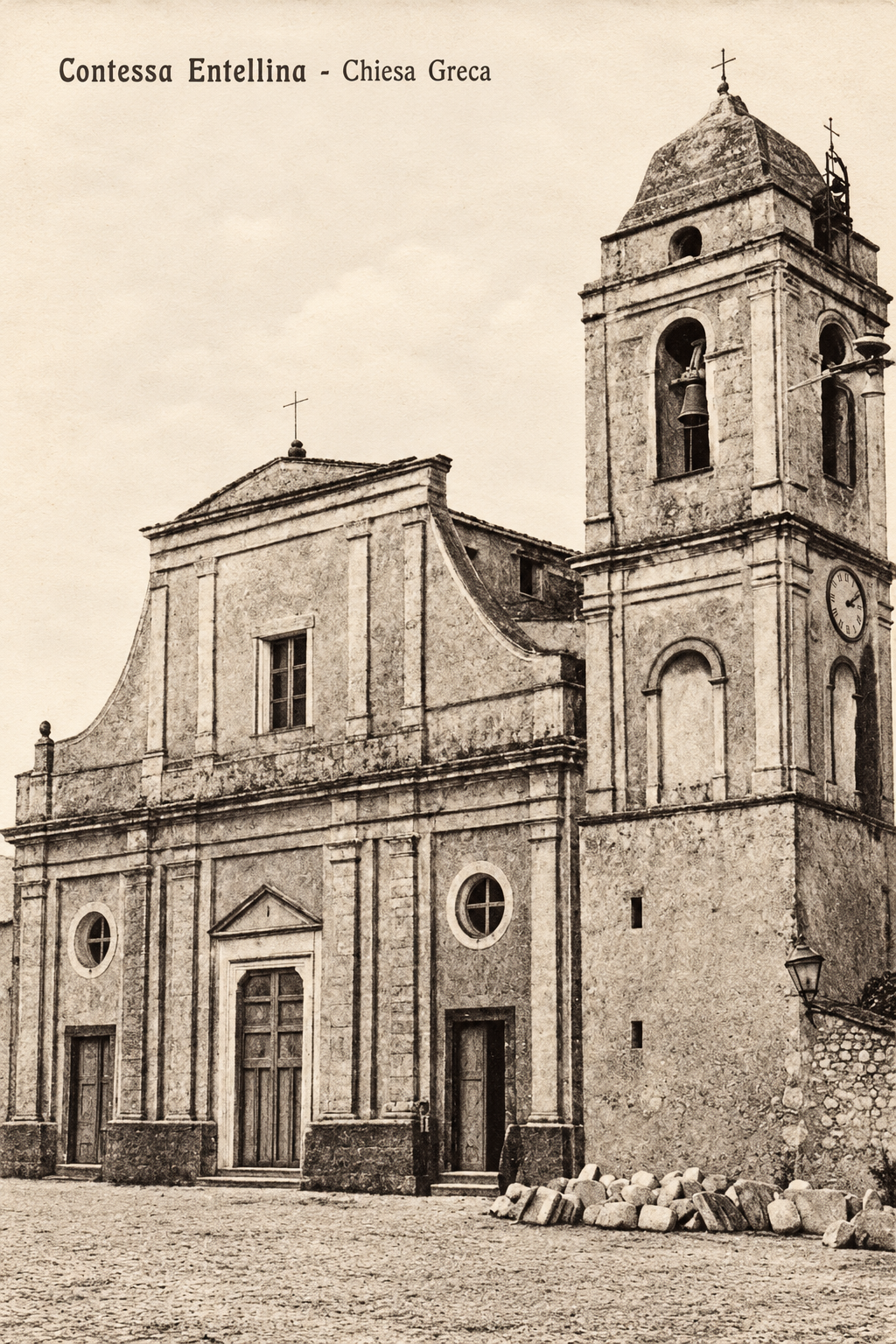
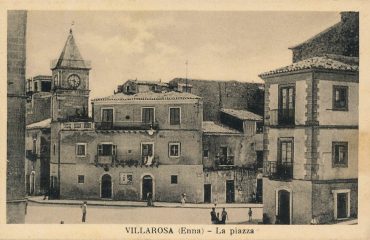
Contessa Entellina – Greek Church (vintage postcard)
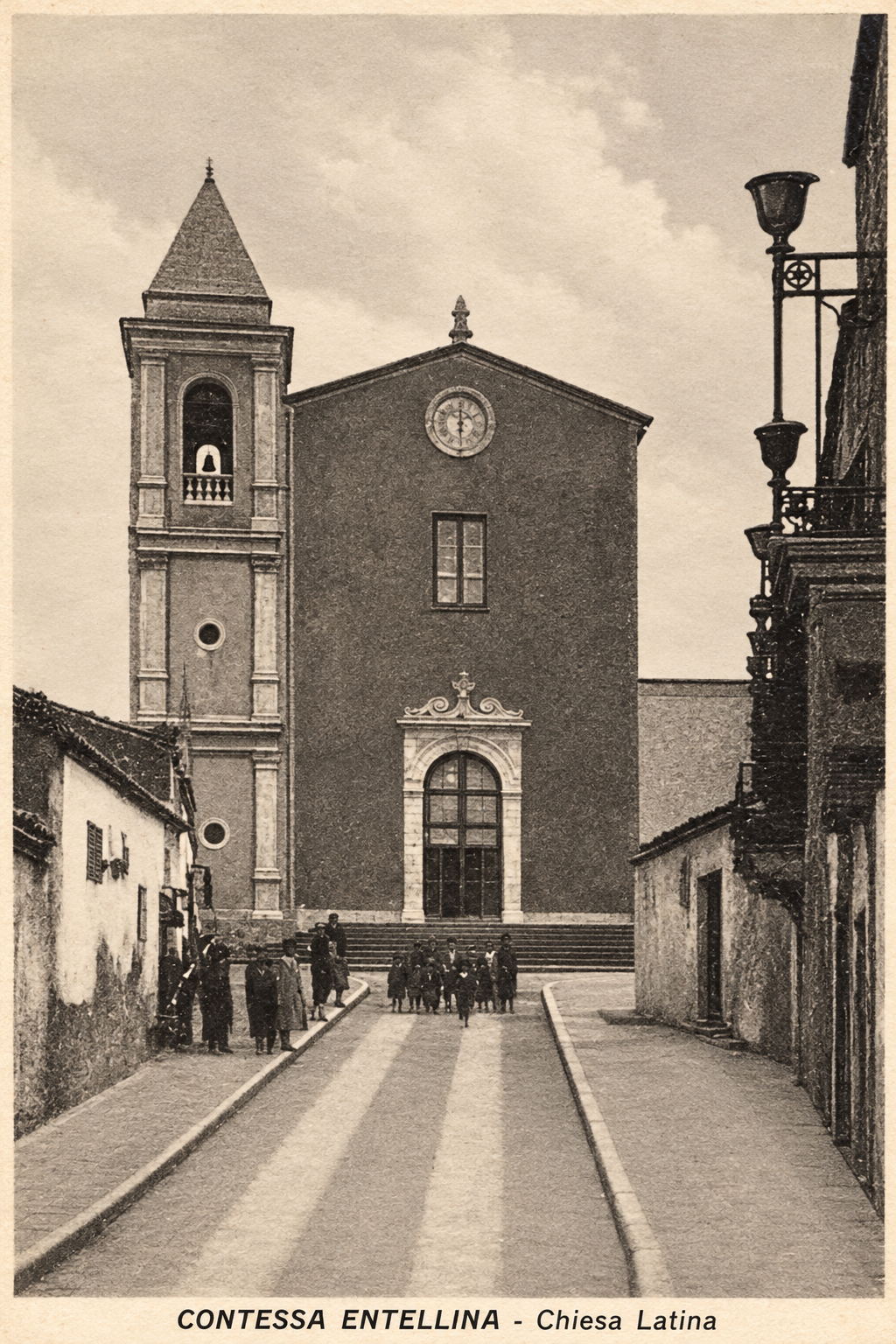
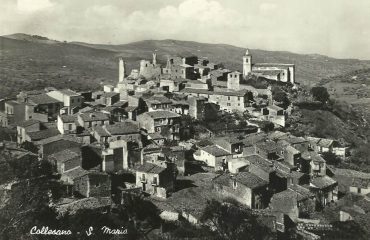
Contessa Entellina – Latin Church (vintage postcard)
Relations between the two communities were generally cooperative, but disagreements did arise, particularly over the prerogatives of their respective clergy and the use of church buildings. Disputes concerning the church of Madonna della Favara led to an agreement on September 6, 1754, regulating the rights of the two parishes. It recognized the Greek-Albanian community’s ownership of the church and its right to hold important Byzantine-rite services there, including celebrations during the first half of August and on September 8 in honor of Madonna della Favara.
By the middle of the eighteenth century, Contessa therefore had a distinctive social and cultural character, shaped by the coexistence of different traditions deeply rooted in the community’s history. It is against this background that the Riveli di beni e anime of 1748 must be understood. These valuable historical records now allow us to reconstruct a revealing picture of the surnames found in the town in the mid-eighteenth century.
The 1748 Riveli di beni e anime
The Riveli di beni e anime—historical declarations of property and household members—are among the most important documentary sources for studying the population of Sicily in the early modern period.
These were tax declarations recording the composition of households, their movable and immovable property, livestock, outstanding debts, and other information used to assess fiscal obligations.
Although compiled for administrative and taxation purposes, these records are of exceptional value today for genealogical, demographic, and social-history research. They reveal not only the names of inhabitants but also many aspects of their family circumstances and economic lives.
The 1748 Riveli for Contessa are preserved at the State Archives of Palermo (Archivio di Stato di Palermo) in four volumes. Altogether, the records document 717 fuochi (tax households) and a population of 2,565 inhabitants.
| 717 fuochi |
2,565 Inhabitants |
209 Surname forms |
103 Recorded once |
In the fiscal terminology of the period, a fuoco was essentially a family or domestic household, encompassing the head of the household and the people belonging to it.
A systematic examination of the four volumes produced a table of 722 entries: 717 relating to named individuals and five to ecclesiastical institutions. The first three volumes consist mainly of declarations made by heads of households, while the fourth also includes priests, clerics, members of religious orders, some women, and ecclesiastical institutions.
Analysis of the 717 individual entries identified 209 distinct recorded surname forms, which are the subject of the present directory.
It is important to clarify that the surnames examined here belong to the individual heads of household named in the fuochi, together with the individuals listed separately in the fourth volume. The surnames of other members of their households have not been counted.
Consequently, the frequency recorded for a surname does not represent the total number of inhabitants bearing that name, nor does it directly establish the size of the families concerned.
The Most Common Surnames Among Heads of Household
The records reveal a markedly uneven distribution of surnames.
The most frequently recorded surname is Mustacchia, with 44 entries, followed by Schirò (40), Lala (30), and Sciambra (28).
Next come Liuzza and Cuccia, with 19 entries each; Musacchia (17), Glaviano (16), Macaluso (15), and Plescia (15).
Mustacchia▰▰▰▰▰▰▰▰▰ 44
Schirò▰▰▰▰▰▰▰▰ 40
Lala▰▰▰▰▰▰ 30
Sciambra▰▰▰▰▰▰ 28
Liuzza▰▰▰▰ 19
Cuccia▰▰▰▰ 19
Musacchia▰▰▰ 17
Glaviano▰▰▰ 16
Macaluso▰▰▰ 15
Plescia▰▰▰ 15
Together, these ten surnames account for 243 entries, approximately 34% of all the individual entries examined.
Their high frequency shows how widespread certain family names were in eighteenth-century Contessa. However, the figures do not establish whether people bearing the same surname belonged to a single genealogical lineage or to unrelated families sharing that name.
Alongside the most frequently recorded names, the directory contains a considerable variety of less common forms. No fewer than 103 surnames appear only once—almost half of all the distinct surname forms identified.
Spelling Variants of Surnames
A particularly interesting feature of the records is the variation in spelling between apparently similar surnames.
Examples include Arisco and Arrisco, Carnese and Carnesi, Manale and Manali, Gasisi and Gassisi, and Ognibene and Ognibeni.
Such differences may reflect variations in spelling, features of local pronunciation, clerical errors, or the actual existence of distinct surname forms. Similarity of spelling alone, however, cannot establish whether two surnames originally belonged to the same family. Accordingly, this directory keeps the different forms separate, respecting their transcription from the original sources and avoiding mergers unsupported by specific genealogical evidence.
The directory should therefore be understood as a list of surname forms attested in the Riveli, not as an inventory of genealogically distinct family lines.
Alphabetical Directory of Surnames in Contessa in 1748
The following directory contains the surnames of heads of households recorded in the 1748 Riveli of Contessa, together with those of the individuals separately listed in the fourth volume, including members of the clergy. The number in parentheses indicates how many times each surname appears among the individual entries examined.
A–C
Amodeo (3), Arisco (2), Arrisco (6), Barcia (1), Barone (9), Bello (4), Bilello (1), Bonafidi (1), Brigano (1), Bruno (3), Bruscia (2), Cacioppo (4), Calcagno (1), Calivà (8), Cammuccio (1), Cappello (3), Cardinale (1), Cardinali (1), Carnese (1), Carnesi (2), Carreca (4), Carta (1), Caruso (4), Cascio (3), Cassisi (1), Castrogiovanne (1), Catalano (2), Catalanotto (3), Certa (2), Chetta (14), Chichirì (2), Chisesi (1), Cicio (1), Cirasa (1), Ciulla (1), Clesi (12), Collica (4), Collidà (1), Conti (6), Costantino (1), Cosumano (1), Cotitto (2), Crapisi (1), Crispi (3), Cuccia (19), Cusumano (1), Cuttitto (1),
D
D’Adorna (1), D’Ala (1), D’Alfano (1), D’Amblo (1), D’Oddo (1), D’Ognibene (1), D’Orsa (7), Di Bartolo (5), Di Bella (5), Di Benedetto (1), Di Betta (6), Di Campo (1), Di Carlo (2), Di Chiara (1), Di Giorgio (1), Di Giovanna (8), Di Latino (2), Di Leo (1), Di Leone (1), Di Liberto (1), Di Maggio (8), Di Maio (1), Di Marco (2), Di Martino (2), Di Napoli (3), Di Noto (1), Di Stefano (2), Dichiara (1), Dolce (11), Duci (1),
F–G
Faciana (1), Faciano (1), Ferrara (4), Ferraro (2), Ferrigno (1), Fileccia (1), Fiorenza (3), Fiorito (5), Fisco (4), Fleccia (1), Foto (10), Franco (8), Gagliano (1), Galfano (2), Gargano (9), Gasisi (1), Gassisi (3), Genova (3), Genovese (3), Geraci (1), Giaccone (1), Giammetta (1), Giattina (1), Gibbella (1), Gibella (1), Glaviano (16), Golemi (1), Graffato (1), Granà (2), Gulotta (1),
I–L
Iacuno (1), Iannazzo (1), La Guzzarda (1), La Mendola (1), Lala (30), Lamanno (1), Latino (4), Leone (1), Licorse (1), Liuzza (19), Liuzzardo (2), Lo Bosco (2), Lo Cascio (2), Lo Ciaccio (2), Lo Iacono (2),
M
Macaluso (15), Maggio (6), Manale (2), Manali (7), Manciaracina (3), Mancuso (1), Marciante (1), Marino (3), Masi (1), Mendola (1), Messina (1), Migliore (3), Milillo (1), Militello (1), Moderno (1), Modica (2), Montalbano (2), Morreale (1), Mulè (1), Musacchia (17), Mustacchia (44),
N–P
Napoli (1), Naro (2), Nobile (1), Oddo (2), Ognibene (1), Ognibeni (3), Oliveri (1), Omodei (1), Palma (1), Palmeri (2), Parrino (5), Peppi (2), Pircopo (3), Pisciotta (1), Pizzolato (5), Plescia (15), Porcaro (1), Provinzano (4), Puzzunì (1),
R
Rabbito (2), Ragolia (1), Ragulia (1), Ragusa (1), Raviotta (6), Restivo (1), Rezza (1), Ricca (2), Ricotta (1), Riillo (1), Riola (1), Rizzuto (3), Roccaforte (1), Romano (7), Russo (2),
S–T
Sacco (1), Salvato (5), Scalora (3), Scariano (2), Scavotto (3), Schirò (40), Sciambra (28), Sciurtino (2), Sicula (1), Spada (3), Spriferi (1), Stabile (1), Sutera (1), Tallarita (2), Tamborello (2), Tamburello (4), Tardo (8), Tortorici (4), Traficanti (1), Traina (2), Tripoli (1), Turturici (2),
V–Z
Valenti (1), Vallone (1), Vitagliotta (1), Viviano (2), Volpe (2), Xhalma (1), Zafaro (1), Zalapì (2), Zamandà (3), Zito (1).
Concluding Remarks
This directory of surnames recorded in Contessa in 1748 offers a snapshot of the town’s onomastics in the mid-eighteenth century, reflecting its distinctive social and cultural history.
Above all, the information provides a reference point for genealogical and historical surname research, making it possible to establish whether a particular surname was recorded in Contessa at a specific point in time.
These records cannot, by themselves, establish the geographical origins of individual families, their original affiliation with the town’s different cultural communities, or possible genealogical relationships between families sharing the same surname.
The principal value of this directory lies in making an organized body of data drawn directly from original archival records available to researchers and anyone interested in family history.
Would You Like to Discover Your Family History in Contessa Entellina?
If your family comes from Contessa Entellina and you would like to learn more about your roots, finding your surname in this directory could provide a useful starting point.
My name is Marcello D’Aleo, and I have devoted more than forty years to professional genealogical research in Sicily and southern Italy. Through my genealogical research firm, the Centro Meridionale Ricerche Genealogiche (Southern Italy Genealogical Center), I help people rediscover the history of their ancestors by tracing family relationships through original documents preserved in the archives.
I personally oversee every research project, with the care and rigor that sound genealogical investigation requires.
If you would like to trace your family’s history in Contessa Entellina, please contact me. I will be happy to review the information you already have and provide a free preliminary assessment of the feasibility of a personalized genealogical research project.
© Centro Meridionale Ricerche Genealogiche di Marcello D’Aleo – All rights reserved.